

Executive Summary
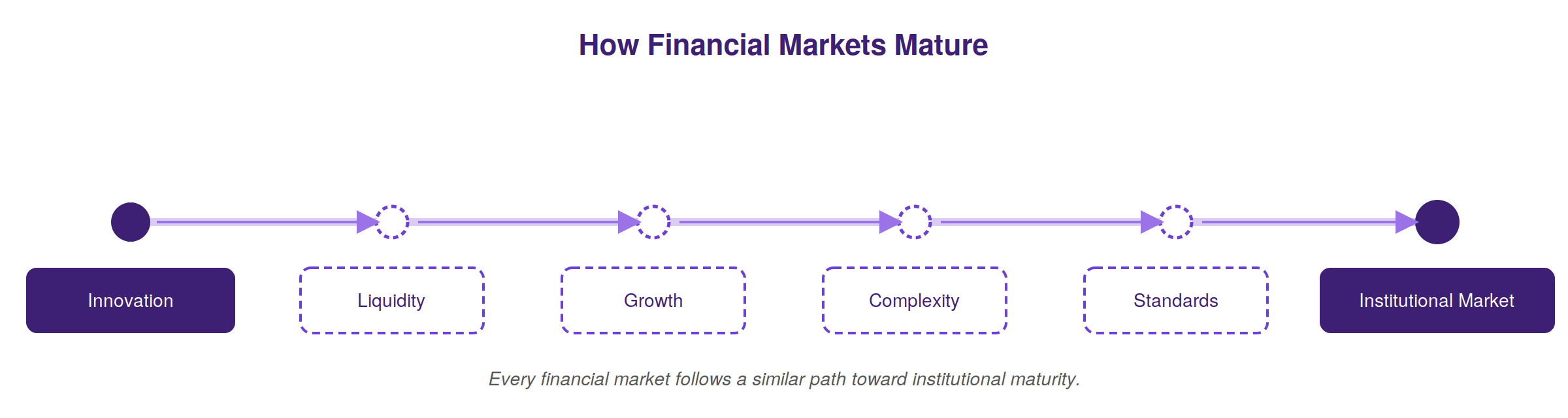
Every young financial market follows a familiar path. It begins with innovation, then adoption, then growth. Eventually, something changes. Growth creates complexity, complexity creates friction, and the market begins searching for better ways to reduce uncertainty.
The transferable tax credit market is entering that stage today. The first chapter was about proving transferability could work. The next chapter will be about making the market more efficient, more transparent and more institutional — not through more transactions, but through better ones.
"The future won't be defined by how many tax credits are transferred. It will be defined by how confidently they are transferred."
Every Market Evolves
Think about almost any mature financial market: commercial lending, commercial real estate, public equities, private equity, infrastructure investing. None of these markets became institutional overnight. They matured over decades, not because the assets changed, but because the way people evaluated those assets changed. Documentation became more consistent, risk became easier to understand, processes became more predictable, and trust became easier to build.
The transferable tax credit market is beginning the same journey.
The Conversation Is Already Changing
Listen carefully to conversations across the market. A few years ago, most questions sounded like this: who is buying, what price is achievable, how will transferability work. Increasingly, the questions sound different: how can diligence move faster, how should projects be prepared, what information do institutional buyers expect, how do we reduce execution risk, and how should projects be monitored after closing.
Those aren't signs of an emerging market. They're signs of a market beginning to institutionalize.
Markets mature when participants spend less time debating whether something is possible and more time improving how it's done.
Capital Isn't the Constraint Anymore
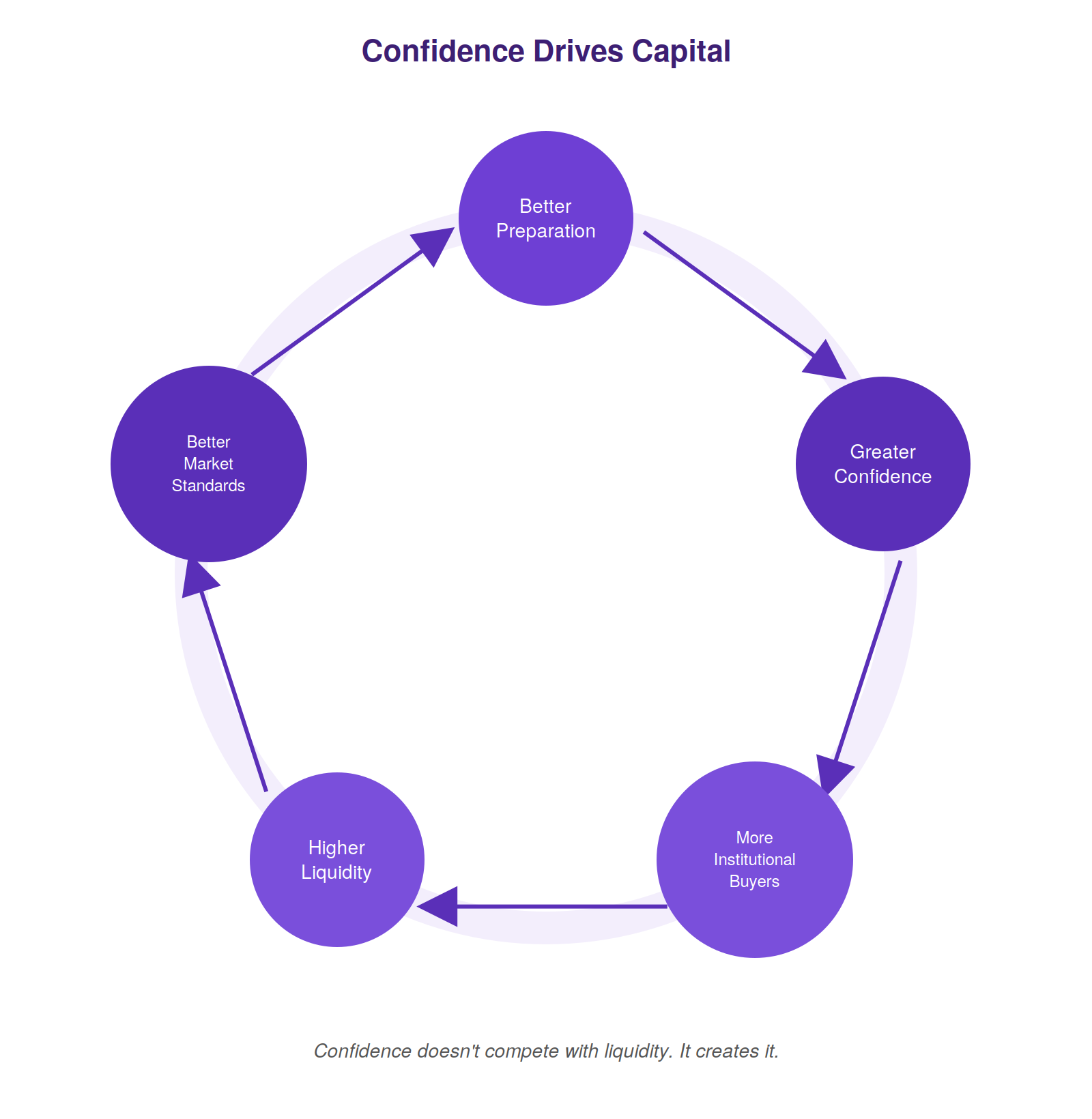
This may be one of the market's biggest changes. The industry often assumes that attracting more capital is the primary challenge. Capital certainly matters, but capital follows confidence. Institutional investors don't avoid markets because they're small — they avoid markets where uncertainty is difficult to evaluate.
As transparency improves, as expectations become clearer, and as processes become more consistent, capital naturally becomes easier to attract. Confidence doesn't replace liquidity. It creates it.
Institutional Markets Think Differently
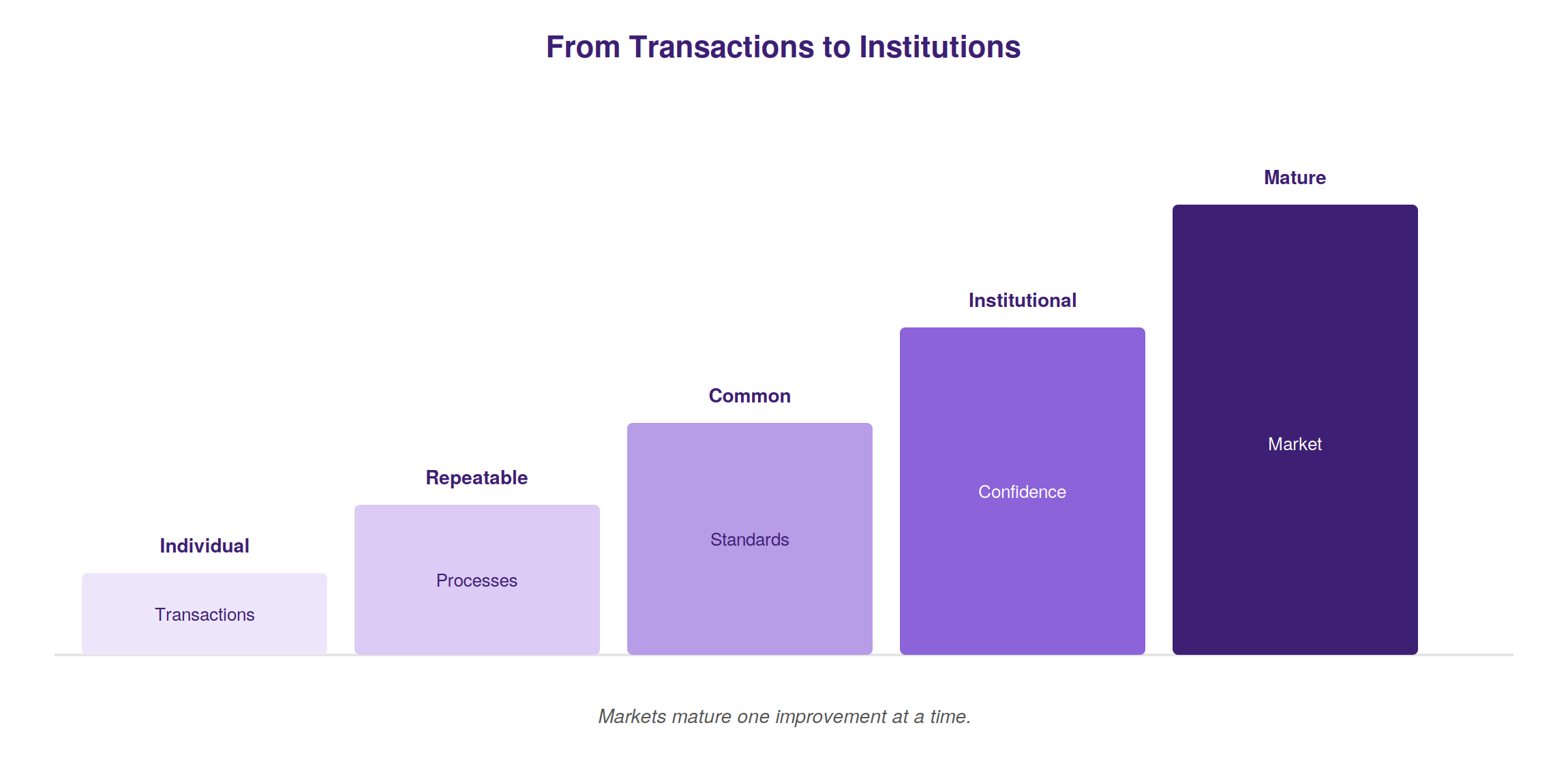
Young markets often focus on individual transactions. Institutional markets focus on systems: how information moves, how decisions are made, how knowledge is preserved, and how confidence is maintained. The transferable tax credit market is gradually shifting from transaction thinking to market thinking. That's an important change, because systems improve every transaction that follows.
The Opportunity Is Bigger Than Technology
Technology will undoubtedly reshape this market. So will regulation. So will capital. But none of those changes represent the deepest transformation. The biggest opportunity is changing how the market works — making preparation more consistent, making information easier to understand, making decisions easier to support, and making confidence easier to build. Technology simply helps accelerate that transition.
Looking Ahead
The transferable tax credit market is still writing its early chapters. That makes this an unusual moment. Participants aren't simply adapting to the market — they're helping define it. The decisions made today, how projects are prepared, how information is shared, how diligence is conducted, and how confidence is maintained, will shape the expectations of tomorrow. That's true of every market that eventually becomes institutional. This one will be no different.
The Vericap Perspective
Markets don't become institutional because they get bigger. They become institutional because they become easier to trust. That shift rarely happens all at once. It happens through thousands of small improvements: better preparation, clearer information, more consistent processes, knowledge that compounds instead of disappearing, and confidence that extends beyond closing.
We believe those changes are already underway, and we believe they'll define the next decade of the transferable tax credit market.
Key Takeaways
The transferable tax credit market is entering its next phase of maturity, and confidence is becoming just as important as capital. Institutional markets are built through better systems, not just more transactions, and small improvements in preparation, transparency and consistency compound over time. The future belongs to markets that make trust easier to build.
Closing Thought
The first chapter of the transferable tax credit market proved that transferability works. The next chapter will determine how well the market itself works.
So Far, on Vericap Insider
Issue 009 - The Market Doesn't Need More Deals
It needs better standards.
Issue 008 - Every Transaction Starts From Scratch
The transferable tax credit market has a knowledge problem — not an experience problem.
- Issue 007 - Closing Isn't the Finish Line
Transactions are remembered because years later, they still hold up. - Issue 006 - The Best Projects Aren't Built for Buyers
Preparation, not perfection, is what shortens a closing timeline. - Issue 005 - The Best Buyers Don't Buy Tax Credits
Price starts the conversation in a tax credit transaction. - Issue 004 - AI Isn't Replacing Due Diligence
AI is removing repetitive tasks that prevent experts from doing their best work. - Issue 003 - The Data Room Was Never the Point
More paperwork doesn't win a transferable tax credit deal; understanding does. - Issue 002 - Inside a $50 Million Tax Credit Transaction: What Happens Between the NDA and the Closing Table
Pricing starts the conversation. Confidence closes it. - Issue 001 - Why the Transferable Tax Credit Market's Biggest Problem is No Longer Finding Buyers
The next challenge isn't finding buyers. It's building trust.