

Executive Summary
The transferable tax credit market is growing rapidly. Every month, more projects enter the market, more buyers participate, more advisors specialize in transactions, and more capital becomes available. Growth is healthy, but growth alone doesn't create mature markets.
History shows that markets become institutional when participants begin solving problems the same way. Common expectations emerge, documentation becomes more consistent, and due diligence becomes more predictable. Buyers gain confidence because they know what "good" looks like. The transferable tax credit market is approaching that stage. The next opportunity isn't simply increasing transaction volume. It's increasing consistency.
“Markets don't scale because they become bigger. They scale because they become more predictable.”
Growth Creates Complexity
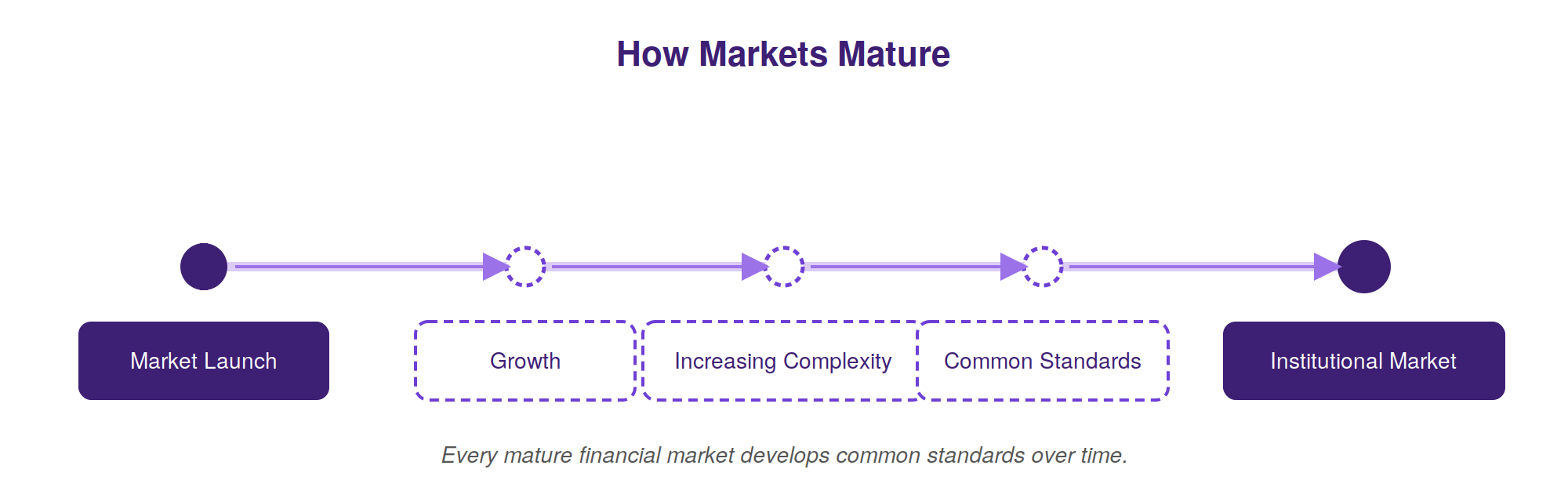
Every successful market follows a familiar path. At first, almost every transaction is different. Participants invent new processes, documentation varies, and expectations differ from buyer to buyer. That's normal. Young markets are experimental by nature.
But as transaction volumes increase, inconsistency becomes expensive. The same project receives different diligence requests. Different buyers organize reviews differently. Developers prepare materials in different formats. None of these approaches are necessarily wrong. They're simply difficult to scale.
Consistency Builds Confidence
Imagine reviewing ten different projects. Each developer presents information differently, each data room has a different structure, each engineering report follows a different format, and each financial summary highlights different assumptions. Eventually, buyers spend as much time learning the presentation as they do evaluating the project.
Now imagine the opposite. Projects are still unique, but the information is organized consistently. Important assumptions are easy to identify, and supporting evidence follows a familiar structure. Questions become easier to answer because the information is easier to navigate. Consistency doesn't reduce diligence. It reduces unnecessary effort.
Institutional buyers value consistency because it allows them to compare opportunities more efficiently, not because every project is identical.
Standards Don't Limit Flexibility
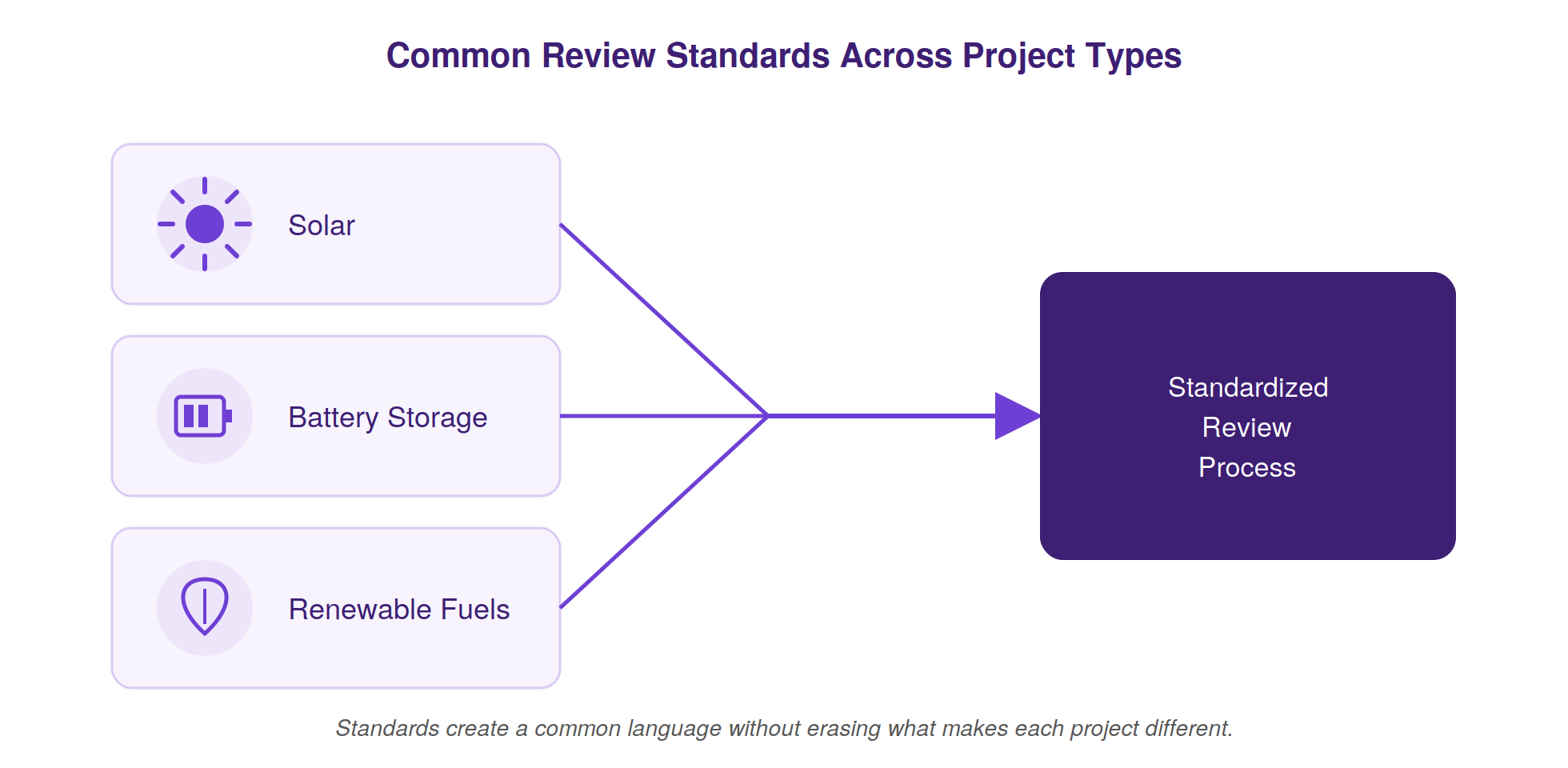
Some people hear the word "standardization" and assume creativity disappears. The opposite is true. Think about accounting: financial statements follow consistent rules, yet businesses remain completely different. Think about commercial real estate: due diligence follows established practices, yet no two buildings are the same.
Standards don't remove differences. They create a common language for evaluating them. The transferable tax credit market is moving in the same direction.
Better Standards Reduce Friction
Every transaction creates small decisions. Where should documents be stored? How should assumptions be presented? Which supporting evidence matters most? How should updates be communicated? Individually, these decisions seem minor. Collectively, they shape the efficiency of the entire market.
Markets become faster when participants spend less time deciding how to exchange information and more time evaluating what that information means. That's the hidden value of standards. They allow expertise to focus on judgment rather than administration.
Institutional Capital Prefers Predictability
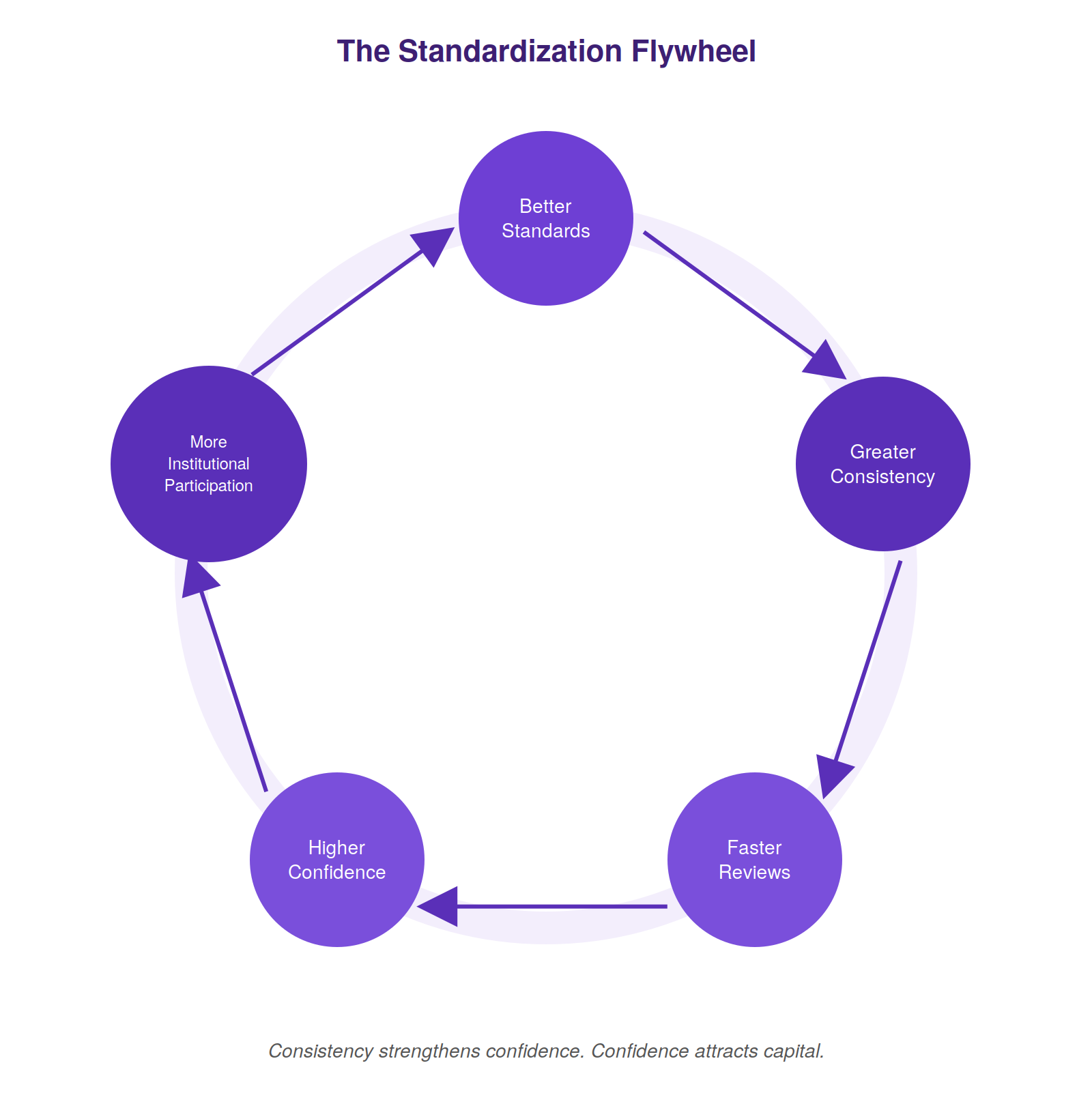
Large institutional investors don't just evaluate opportunities. They evaluate processes. Predictable processes reduce execution risk, improve internal approvals, shorten investment committee discussions, and make portfolios easier to manage. Institutional capital naturally gravitates toward markets where decisions can be made consistently. That's one reason mature financial markets continue attracting more capital over time.
Looking Ahead
The transferable tax credit market doesn't need every participant to work the same way. It does need common expectations. As more institutional buyers enter the market, consistency will quietly become a competitive advantage. Projects will still differ, developers will still innovate, and advisors will still exercise judgment. But the way information is prepared, shared and evaluated will increasingly converge around practices that reduce friction and improve confidence. That is how markets mature.
The Vericap Perspective
Every financial market develops standards that make participation easier, not because regulation demands them, but because the market itself benefits from consistency. We believe the transferable tax credit market is approaching that point.
The future won't be defined by who creates the most documentation. It will be defined by who makes information easiest to understand, compare and trust. That's how institutional markets grow, not just in size, but in quality.
Key Takeaways
Growing markets eventually require common standards, and consistency reduces friction without reducing flexibility. Institutional buyers value predictable processes as much as attractive opportunities, and standardization improves decision-making by making information easier to compare. The next stage of market maturity will be shaped as much by process as by capital.
Closing Thought
The strongest markets aren't built on identical transactions. They're built on shared expectations.
So Far, on Vericap Insider
Issue 008 - Every Transaction Starts From Scratch
The transferable tax credit market has a knowledge problem — not an experience problem.
- Issue 007 - Closing Isn't the Finish Line
Transactions are remembered because years later, they still hold up. - Issue 006 - The Best Projects Aren't Built for Buyers
Preparation, not perfection, is what shortens a closing timeline. - Issue 005 - The Best Buyers Don't Buy Tax Credits
Price starts the conversation in a tax credit transaction. - Issue 004 - AI Isn't Replacing Due Diligence
AI is removing repetitive tasks that prevent experts from doing their best work. - Issue 003 - The Data Room Was Never the Point
More paperwork doesn't win a transferable tax credit deal; understanding does. - Issue 002 - Inside a $50 Million Tax Credit Transaction: What Happens Between the NDA and the Closing Table
Pricing starts the conversation. Confidence closes it. - Issue 001 - Why the Transferable Tax Credit Market's Biggest Problem is No Longer Finding Buyers
The next challenge isn't finding buyers. It's building trust.