

Executive Summary
Every transferable tax credit transaction creates valuable knowledge. Engineering reviews uncover risks, legal teams resolve complex questions, tax advisors interpret regulations, buyers identify assumptions, and developers provide clarifications. Then the transaction closes, and much of that knowledge disappears. The next project starts again, the next buyer asks similar questions, and the next diligence team repeats much of the same work.
This isn't because the industry lacks expertise. It's because expertise isn't being captured in a way that benefits future transactions. As the market matures, one of its greatest opportunities won't be generating more knowledge. It will be keeping it.
"Experience compounds only when knowledge is preserved."
The Industry Has Plenty of Expertise
Walk into almost any tax credit transaction and you'll find experienced people: developers who have built dozens of projects, lawyers who have structured hundreds of transactions, engineers with decades of technical experience, and tax professionals who understand the regulations in remarkable detail. Expertise isn't the issue.
Yet many transactions still feel like the first time. That's because expertise often lives inside people, not inside the transaction.
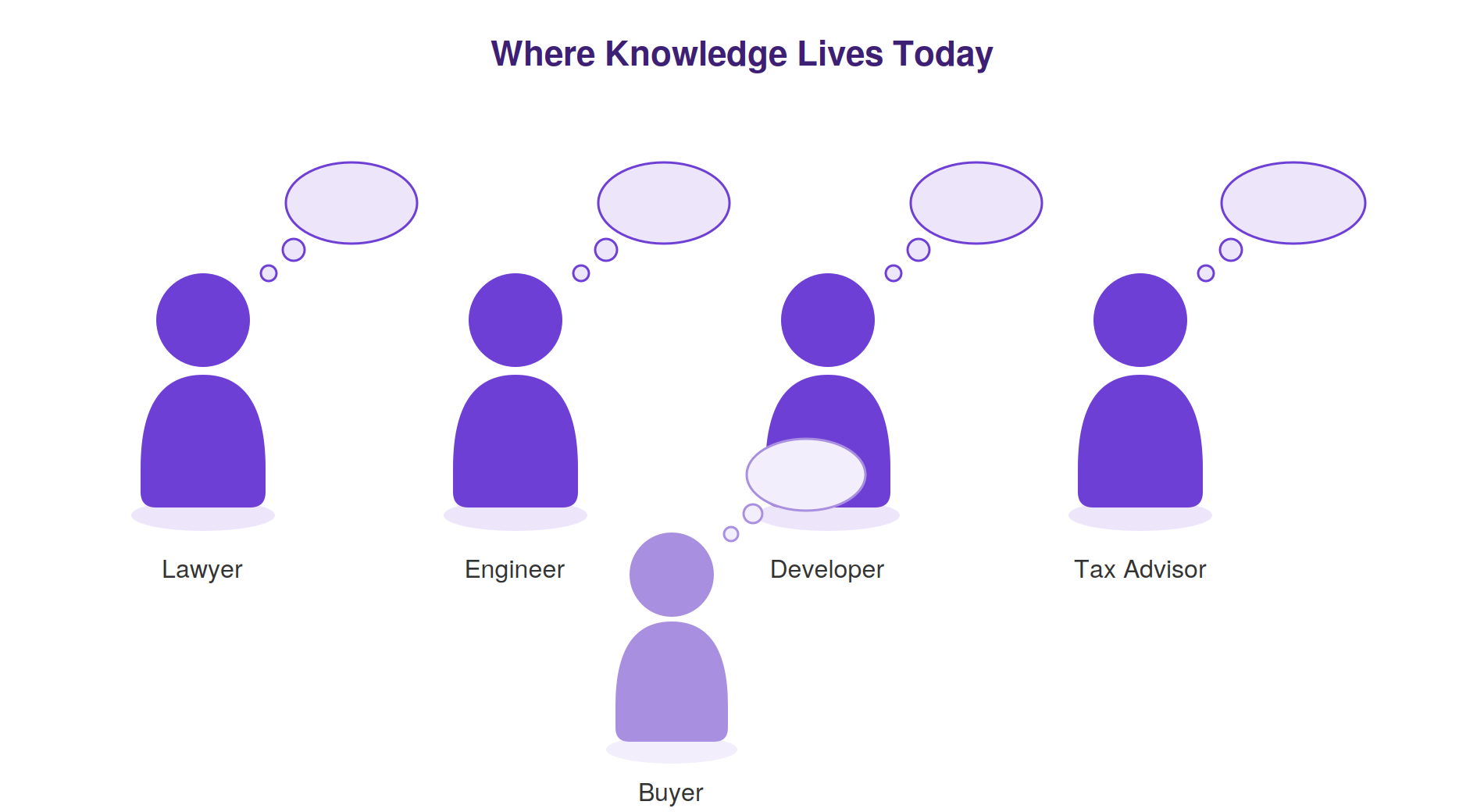
Much of today's knowledge lives with people — not with the transaction itself.
Every Transaction Generates Answers
Consider a typical diligence process. Questions are raised, clarifications are provided, engineering assumptions are explained, supporting calculations are reviewed, legal interpretations are documented, and commercial risks are discussed. Over several weeks, the transaction becomes easier to understand — not because the project changed, but because uncertainty was gradually removed.
That process creates something valuable: knowledge. Yet once the transaction closes, much of it becomes surprisingly difficult to find again.
Every completed diligence process should make the next one easier. Too often, it doesn't.
Repetition Is Expensive
Imagine reviewing the same engineering assumption three different times, not because the assumption changed, but because three different buyers needed to reach the same conclusion independently. Now imagine repeating that process across dozens of projects. The cost isn't just time. It's lost momentum, repeated effort, and slower decisions. Markets naturally become more efficient when they stop solving the same problems over and over again.
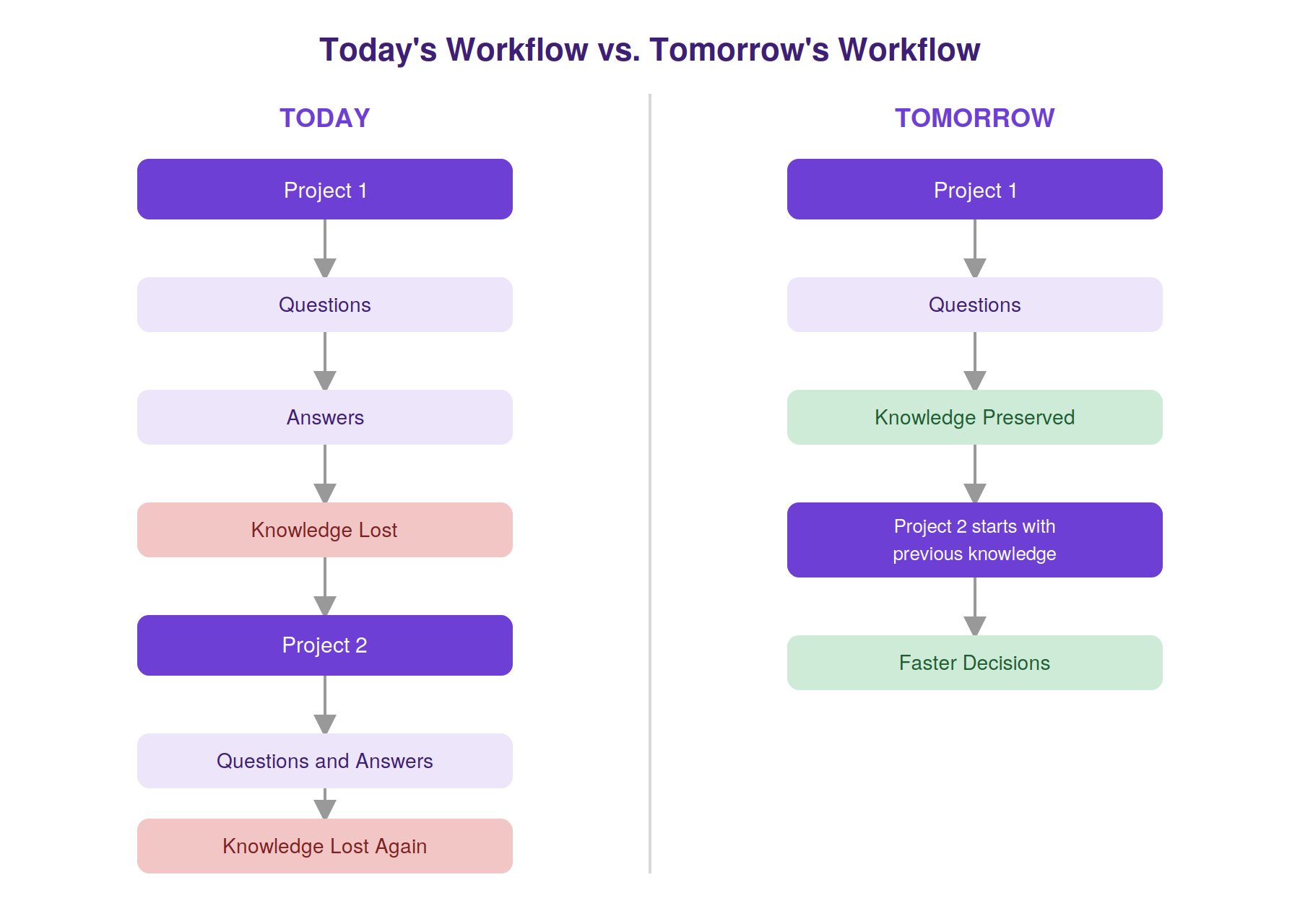
In today's model, knowledge resets with every new project. In tomorrow's model, each transaction builds on the last.
Institutional Markets Learn
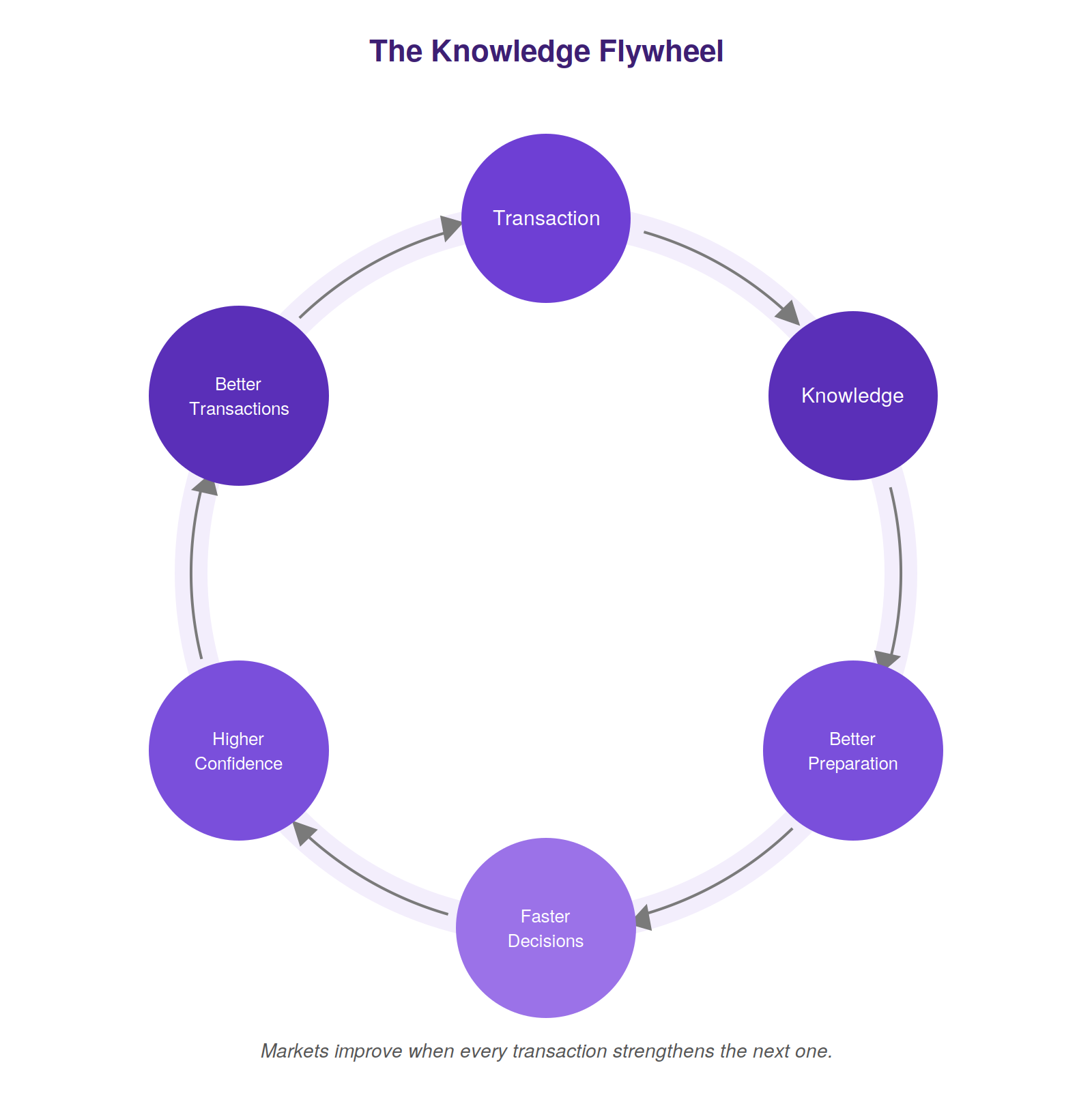
One characteristic separates mature financial markets from emerging ones: learning. Markets improve because information accumulates, standards evolve, and processes become repeatable. Participants don't simply become more experienced — the market itself becomes more knowledgeable.
Transferable tax credits are still early in that journey. Today, many organisations improve internally. Tomorrow, the industry will increasingly benefit from improving collectively.
Better Decisions Begin Earlier
One of the most interesting shifts happening today isn't technological. It's philosophical. Rather than asking, "How do we answer this question?", leading organisations increasingly ask, "How do we avoid asking the same question again?" Those are fundamentally different ways of thinking. One improves individual transactions. The other improves the market itself.
Looking Ahead
The transferable tax credit market is still building its institutional foundations. Over time, buyers will become more sophisticated, developers will become more prepared, and advisors will refine their processes. The organisations that learn fastest won't simply complete more transactions — they'll improve every transaction that follows. That is how mature markets evolve.
The Vericap Perspective
Every transaction leaves behind more than a completed transfer. It leaves behind lessons, questions, decisions, evidence, and context. We believe those insights should not disappear when the deal closes. Markets become stronger when knowledge compounds, and the future belongs to organisations — and industries — that learn continuously rather than repeatedly.
Key Takeaways
The industry has an expertise advantage, but a knowledge management challenge. Every transaction creates valuable institutional knowledge, and repeating work slows markets down. Mature markets improve because learning compounds over time, and the next generation of transferable tax credit transactions will build on previous knowledge rather than restart from zero.
Closing Thought
The smartest markets aren't the ones with the most experience. They're the ones that remember it.
So Far, on Vericap Insider
- Issue 007 - Closing Isn't the Finish Line
Transactions are remembered because years later, they still hold up. - Issue 006 - The Best Projects Aren't Built for Buyers
Preparation, not perfection, is what shortens a closing timeline. - Issue 005 - The Best Buyers Don't Buy Tax Credits
Price starts the conversation in a tax credit transaction. - Issue 004 - AI Isn't Replacing Due Diligence
AI is removing repetitive tasks that prevent experts from doing their best work. - Issue 003 - The Data Room Was Never the Point
More paperwork doesn't win a transferable tax credit deal; understanding does. - Issue 002 - Inside a $50 Million Tax Credit Transaction: What Happens Between the NDA and the Closing Table
Pricing starts the conversation. Confidence closes it. - Issue 001 - Why the Transferable Tax Credit Market's Biggest Problem is No Longer Finding Buyers
The next challenge isn't finding buyers. It's building trust.