

We celebrate the wrong moment
The industry naturally treats closing day as the finish line. That's understandable. Months of work come together, the agreement gets signed, funds move, and everyone shifts their attention to the next deal.
But from an institutional standpoint, something more important just started. A new owner now holds the tax position. That changes the question being asked. It's no longer "should I buy this project?" It becomes “how do I keep having confidence in this investment?
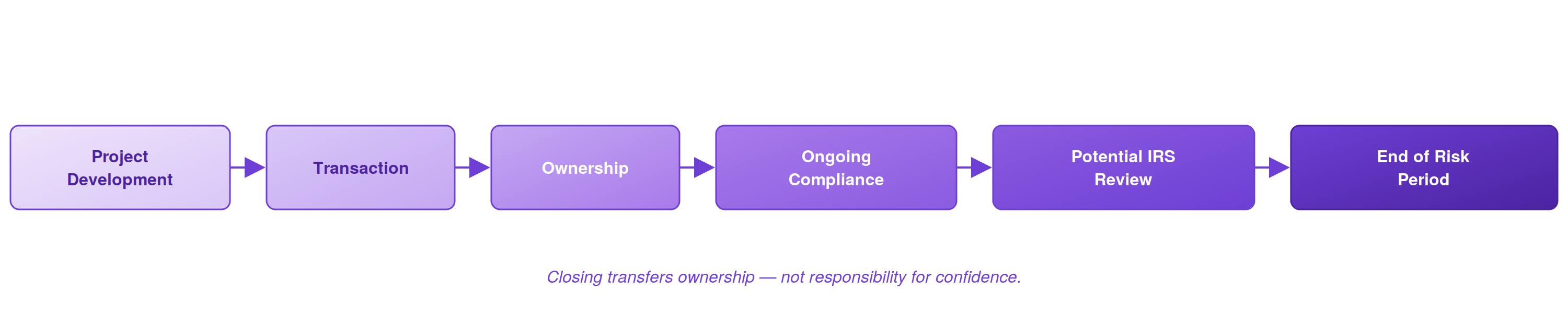
Closing transfers ownership — not responsibility for confidence.
Confidence doesn't expire at closing
Transferable tax credits don't behave like a lot of other financial assets. Confidence isn't something you establish once and file away. Projects keep operating. Ownership structures shift. Documentation needs to stay accessible. New regulatory guidance can surface years after a deal closes.
If questions come up later, the people involved often need to reconstruct the thinking behind decisions made long before. That's straightforward when the information was preserved. It's much harder when the knowledge left the room the day the deal closed.
Every transaction creates institutional memory
Think about everything that gets worked out during a single transaction: engineering assumptions, tax interpretations, insurance reviews, commercial negotiations, legal conclusions, risk discussions, clarifications back and forth. That's not just work getting done. It's institutional knowledge being created in real time.
Most of it, though, ends up living in emails, meeting notes, and the memories of the people who worked the deal. As this market matures, preserving that knowledge is going to matter just as much as creating it in the first place.
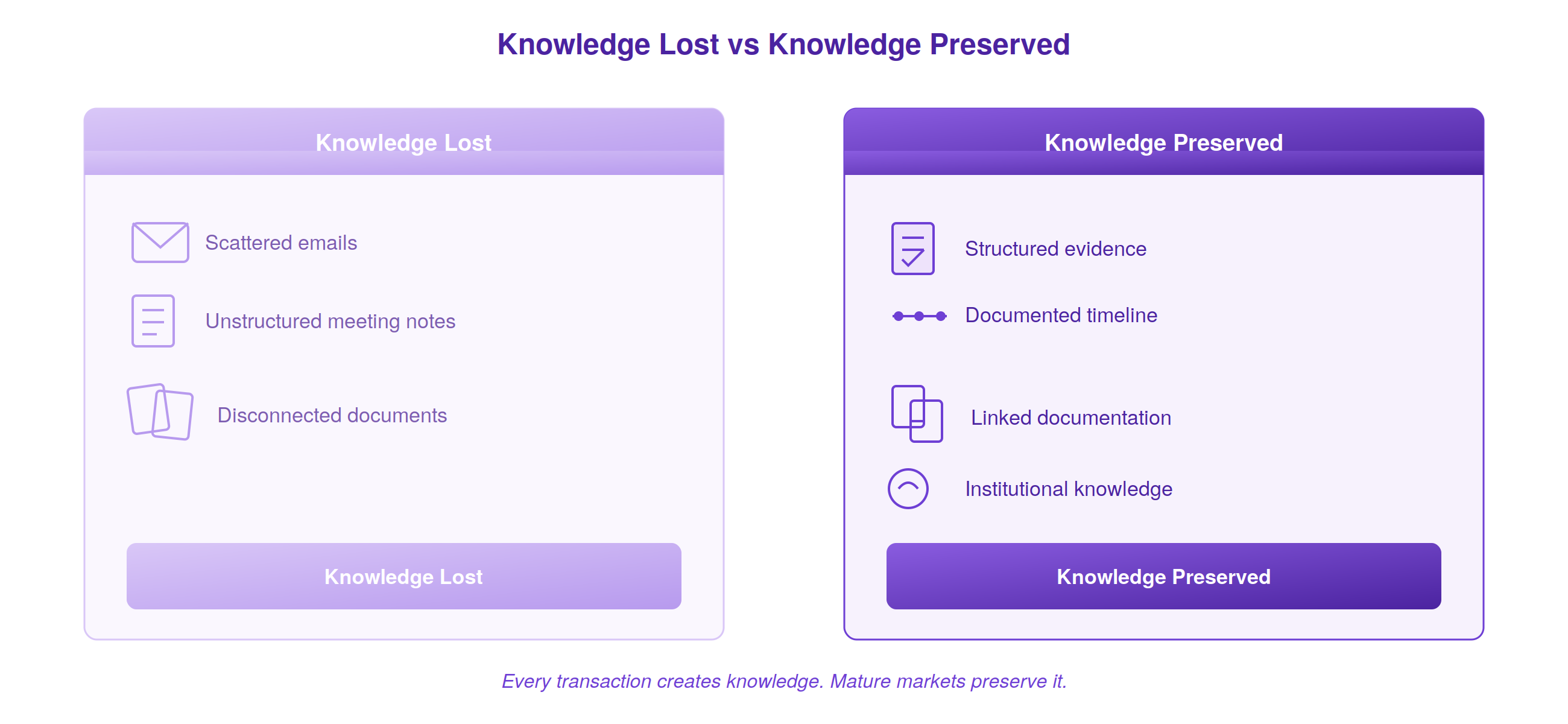
Every transaction creates knowledge. Mature markets preserve it.
Institutional markets think in longer horizons
The real difference between a transactional market and an institutional one comes down to time horizon. Transactional markets are built around execution: get the deal done, move on. Institutional markets are built around durability: will the reasoning behind this deal still make sense five years from now?
That mindset shift changes how projects get documented, how evidence gets maintained, and how decisions get recorded along the way.
Monitoring is about confidence, not just compliance
When people hear "monitoring," they usually think reporting requirements or regulatory boxes to check. Those matter, but they're not really the point. Monitoring exists because confidence isn't a fixed thing. Markets shift. Projects shift. Information shifts. Confidence needs to keep pace with all of it.
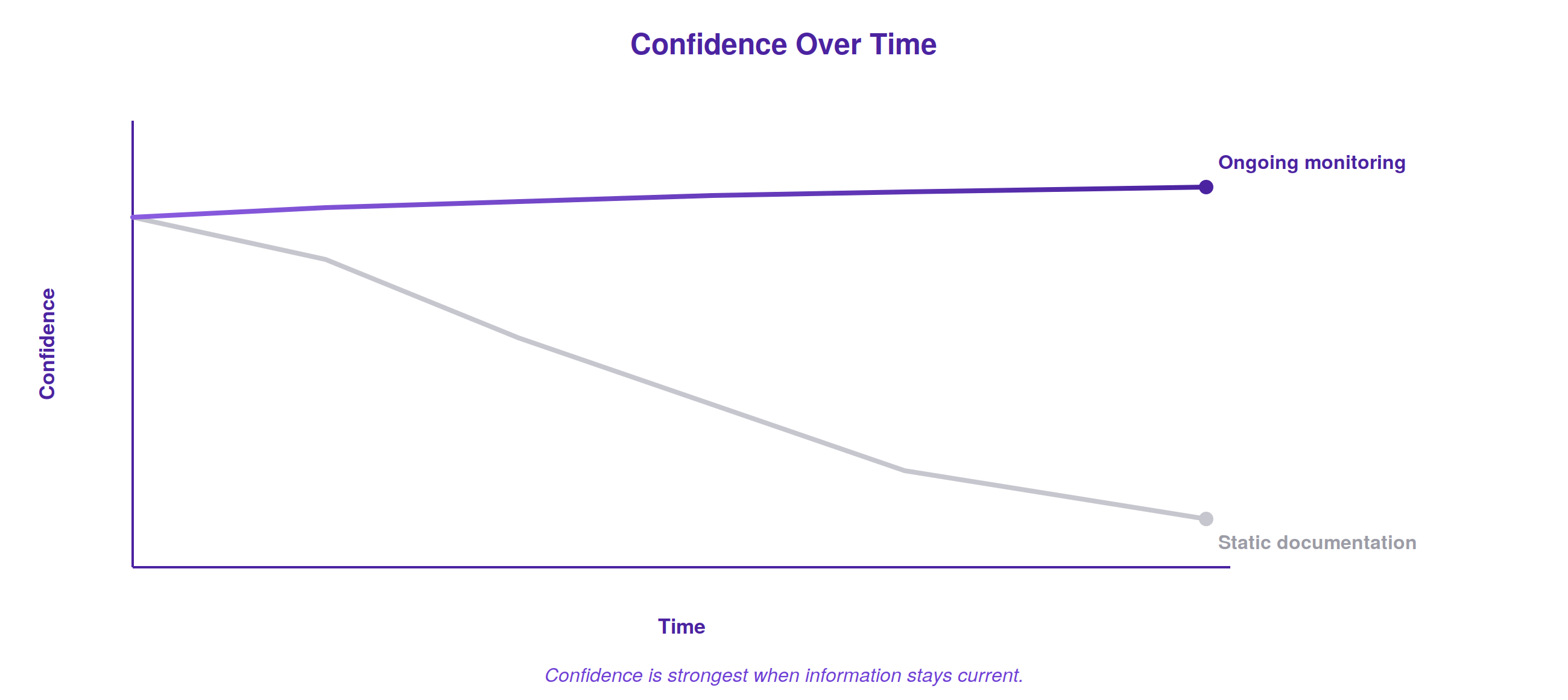
Confidence is strongest when information stays current.
Looking ahead
The transferable tax credit market is still in its early stages, and most of the industry's attention right now is on closing deals. That's a natural starting point. As the market matures, more of that attention will shift toward what happens after the transaction: maintaining confidence over the life of the credit, not just at signing.
Every mature financial market has gone through this same shift. There's no clear reason this one will be an exception.
The Vericap Perspective
A transaction can close in a single day. Confidence needs to last a lot longer than that.
We think transferable tax credits are heading toward a future where transparency, evidence, and institutional knowledge stay valuable well after ownership changes hands. Markets get more resilient when confidence doesn't rely on someone's memory of how a decision was made. It relies on information that still makes sense years later.
That's what it looks like when a market matures.
Key takeaways
- Closing marks the start of ownership, not the end of the confidence a deal requires.
- Every transaction generates institutional knowledge worth keeping.
- Mature markets preserve that knowledge instead of losing it to time.
- Confidence has to be maintained well past the closing date.
The market's next phase is about durability, not just execution.
Closing thought: The strongest transactions aren't remembered for closing. They're remembered because years later, they still make sense.
So Far, on Vericap Insider
- Issue 006 - The Best Projects Aren't Built for Buyers
Preparation, not perfection, is what shortens a closing timeline. - Issue 005 - The Best Buyers Don't Buy Tax Credits
Price starts the conversation in a tax credit transaction. - Issue 004 - AI Isn't Replacing Due Diligence
AI is removing repetitive tasks that prevent experts from doing their best work. - Issue 003 - The Data Room Was Never the Point
More paperwork doesn't win a transferable tax credit deal; understanding does. - Issue 002 - Inside a $50 Million Tax Credit Transaction: What Happens Between the NDA and the Closing Table
Pricing starts the conversation. Confidence closes it. - Issue 001 - Why the Transferable Tax Credit Market's Biggest Problem is No Longer Finding Buyers
The next challenge isn't finding buyers. It's building trust.